
Published December 1, 2025
📈 Why New Arenas & Star-Backed Districts Matter for Real Estate

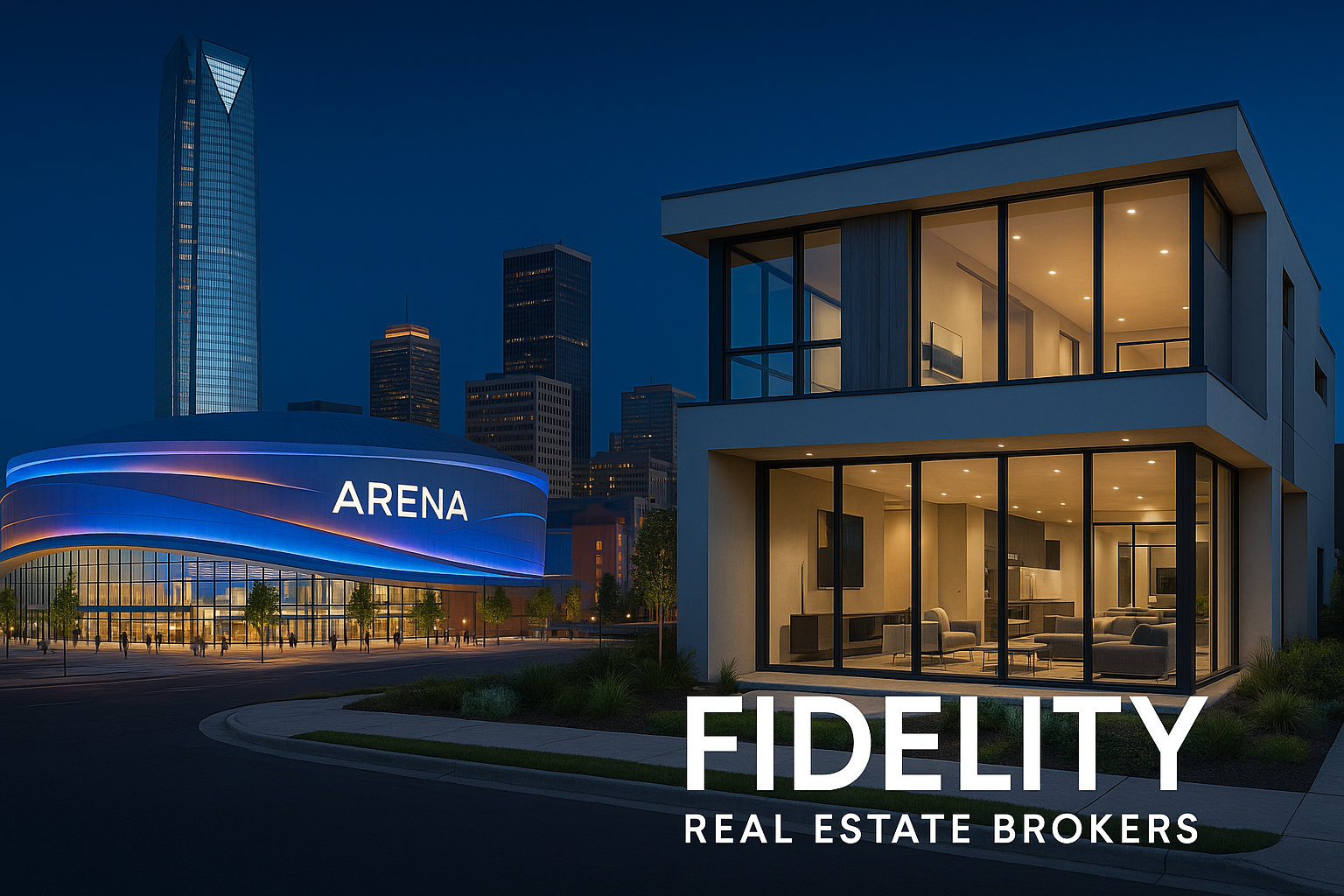
🏙️ What Russell Westbrook’s Investment Means for OKC Real Estate — and Why Now Might Be the Right Time to Invest
In 2025, OKC took a big step forward in its evolution as a sports and entertainment city. Oklahoma City Thunder is building a new arena — a modern, long-term home for the franchise — while a separate, sports-anchored entertainment district under development (anchored by the upcoming stadium from the city’s MAPS 4 program) has enlisted Russell Westbrook as Creative Director.
Westbrook’s involvement — and the broader investment in new venues — signal more than just big games coming to town. They mark a shift in OKC’s identity: from a mid-sized city with regional appeal to a growing, destination-driven metro with lifestyle, culture, and opportunity. For real estate, that creates ripple effects.
📈 Why New Arenas & Star-Backed Districts Matter for Real Estate
• Amenity-driven demand tends to lift nearby property values
Multiple studies have shown that new sports venues and arenas tend to increase housing values and land prices in nearby areas. People pay for convenience, access to entertainment, proximity to nightlife — all the things that come with a major arena or sports district.
One broad review found that housing values near stadiums increased by about 4.7% on average across the U.S.
In addition, well-planned stadium districts often lead to new commercial development, restaurants, retail, and entertainment infrastructure — which further raises neighborhood attractiveness, particularly for renters, young professionals, and relocated workers.
• Land and infill parcels become more valuable (especially mixed-use ready lots)
As venues draw crowds for games, concerts, and events, underutilized or old parcels inside the influence zone — within a few miles of downtown — become prime targets for mixed-use developments, apartments, townhomes, and creative retail. Research has shown stadiums can significantly raise land value within a radius of ~1–2 miles (1.5–3 km).
This makes the current moment especially attractive for investors looking to assemble small parcels, convert older structures, or build from the ground up.
• Demand from relocation, new grads, and lifestyle-seeking renters/buyers
With a champion-caliber NBA team, a new arena, and a high-profile entertainment district backed by a global sports figure, OKC’s visibility grows — which tends to attract families, young professionals, and even talent returning to or staying in-state.
Beyond basketball fans: the improved amenities — venues, nightlife, walkability — appeal to a broader demographic than just sports lovers. That can help the city retain college graduates and young adults who might otherwise leave for bigger metros.
📍 What This Means for Midtown, Downtown & Uptown — and Nearby Neighborhoods
If you live or invest within ~5–10 miles of the arena/district core, here’s how value dynamics may shift:
|
Area / Housing Type |
Expected Trend |
|
Condos, lofts, new-build apartments in Downtown / Midtown / Arts District / Automobile Alley |
Increased demand → higher rents & quicker absorption. |
|
Townhomes / starter-to-mid single-family homes in neighborhoods 5–10 miles out (e.g. uptown, historic districts) |
Premiums on convenience + commute + value → price appreciation and resale demand. |
|
Vacant lots / infill parcels, especially those zoned for mixed-use or redevelopment |
Strong interest: potential for higher bids, especially mixed-use, multi-family or rental projects. |
|
Rental properties near transit / walkable corridors |
More demand from young professionals & staff working downtown, improved rental yields. |
In other cities, similar stadium-driven development produced value uplifts within 1–2 miles, with spillover effects up to 5–10 miles — especially where new amenities, infrastructure, and transit improvements followed the venue.
For OKC: that could mean steady gains in midtown, uptown, and nearby neighborhoods — especially those with good access to downtown and arterial roads.
⚠️ Why It’s Not a Guaranteed Windfall — What Investors Should Watch
It’s easy to get caught up in the excitement, but sports-driven value uplift isn’t automatic or uniform. Some key caveats:
- Some research shows limited or mixed gains, especially if surrounding infrastructure, parking, traffic mitigation or neighborhood integration lag.
- Older homes or poorly maintained properties may lag behind the neighborhood average — the premium often favors renovated, amenity-rich, or well-positioned homes.
- Gentrification pressures and rising rents may affect longtime residents or lower-income tenants. Developers and investors should underwrite renovation costs, carry times, and local market absorption realistically.
- Stadiums can increase traffic, noise, and day-of-event congestion — for some buyers, that’s a trade-off worth factoring in.
In short: success depends on location, timing, quality of assets, and vision — not just proximity.
🧭 How Fidelity Real Estate Brokers Can Help You Participate — Smartly
At this critical moment, Fidelity is uniquely positioned to help investors, buyers, and developers capitalize on OKC’s sports-driven growth. Here’s what we offer:
- Identification of land/lot opportunities: We monitor infill parcels, small-lot assemblages, and mixed-use ready sites across the 0–10 mile zone around downtown.
- Acquisition & underwriting support: Our team calculates pro-forma valuations, renovation budgets, rent or resale forecasts, and risk-adjusted return models based on arena/district impact.
- Mixed-use & redevelopment advisory: Helping convert older properties or lots into townhomes, multi-family, or mixed-use developments to serve the expected demand spike.
- Rental & lease-up strategy for investors: For investors buying rental properties (single-family or small multifamily), we provide rental-rate forecasting, tenant demand analysis, and positioning strategy — targeting professionals, new arrivals, and sports-driven tenants.
- Sales & resale timing expertise: We help sellers time the market, market their listings with “arena-adjacent lifestyle” branding, and price competitively for max return.
If you’re thinking about investing, buying, or flipping within OKC’s evolving core — let’s map out a strategy now, before values shift again.
👟 Final Thoughts: A Moment of Momentum — But Discipline Wins
Russell Westbrook’s involvement, a new arena, and a vibrant entertainment district give OKC a powerful platform. But like any cultural or infrastructure shift, the real gains go to those who act strategically, with data, discipline, and a long-term view.
If you’d like a neighborhood-by-neighborhood impact forecast, rental yield analysis, or land-value mapping for Downtown, Midtown, Uptown, or any up-and-coming corridor — we’re ready to build that for you.
Fidelity Real Estate Brokers — your partner for OKC’s next chapter.